
Do have a sailing story, news, or helpful sailing-related information to share?
Please contact P/C Steve Harris to have it included. We’d love to hear from you.
Often, we focus our rules discussions only on Part 2 of the rules – “When Boats Meet.” This winter, I plan to explore the rules of Part 3 – “Conduct of a Race.” They may appear to only matter to the Race Committee, but they have significant importance to the racing sailor too. – Steve Harris, US Sailing National Race Officer There is a lot of stuff in Rule 32. While shortening a course (eliminating one or more legs) and abandoning are similar, and definitely done for similar reasons, in practice, the two are quite different in how they work on the race course. Keep in mind, most of the rules in Part 3 are tools that the race committee can use to keep races fair, safe, and easy to manage. Rule 32 is very valuable in that sense. Let’s look at the text of the rule… NOTE – Rule 32 only applies after the start. Rule 27.3 allows the race committee to abandon before the start for any reason. Let’s start with how an abandonment is signaled. If we look at the “Race Signals” section of the Racing Rules of Sailing, we find that Flag N is used to signal that the race is abandoned. The N Flag always goes up with three sound signals. In fact, it is the only signal with three sounds. As the name, abandonment, suggests, the race is over. For whatever reason, the race committee has decided to end the race. Although the sound signal is always the same, we have three options on the visual signal. By itself, the N-Flag means the race is abandoned and the race committee intends to resail the race. – return to the starting area. If N is displayed over the H-Flag, the race is abandoned and boats are to return to shore for further signals. If N is displayed over the A-Flag, the race is abandoned and there will be no more racing today. This is primarily for safety considerations. Foul weather might be an approaching storm, but it also could include high winds or sea state. Either way, if conditions are not favorable, certainly if they are not safe, the race committee may abandon the race. There is frequently some debate on when, and under what conditions the race committee should or even must abandon a race. Note that the rule is permissive, not prescriptive. The racing rules provide no guidance or direction on conditions. It is always the skipper’s responsibility to decide whether or not to sail. That noted, there are limits to what is reasonable based on a number of factors – type of boats sailing, experience/age of the competitors, etc. Some one-design classes have very specific upper wind limits and other restrictions in their class rules that provide guidance on this matter. Other times, there is little or none. Often, but not always, a time limit written into the Sailing Instructions. Usually, this is a time limit for the first boat to sail the course and finish. When that is the case, absent other scoring provisions in the SIs, the race committee’s only choice at the expiration of that time limit is to abandon the race (RRS 35). Here is when the shortening part of Rule 32 provides a convenient option, which we will discuss in next week’s post. Note that the rules don’t prescribe that the time limit must expire before the race committee can abandon. The use of the word unlikely gives them the leeway to do so earlier than the time limit if, in their judgment, they determine it to be the best option. In all honestly, this is a horribly unfortunate reason to have to abandon a race. The rules provide the race committee with options to replace a missing or out of position mark. However, we all know that things don’t always go the way we plan. There are times, that problems simply cannot be corrected. Given the race committee permission to abandon in this situation, while unfortunate, gives the opportunity to regroup, reset, and try again. Obviously, stop racing and, depending on what exact abandonment signal was given (N, N over A, or N over H) either return to the starting area or to shore. Stopping racing is not, however, your only consideration. Most race committees attempt to use all the tools at their disposal to “save a race” – shortening, changing the length of a leg, etc. Abandonment is often used as a last resort, and as such, often due to safety concerns. Watch the weather! Look around the course! If you have one, monitor your VHF radio! Is there a safety concern to be aware of and possibly act on? That brings up another rule, new in the 2021-2024 rulebook… Rule 37 – Search & Rescue Instructions “When the race committee displays flag V with one sound, all boats and official and support vessels shall, if possible, monitor the race committee communication channel for search and rescue instructions” This is new in the most recent rulebook, but it reflects a renewed focus on safety both on the part of World Sailing and its member National Authorities (e.g., US Sailing). Likely, it is more directed towards “big boat” sailing where VHF radios are standard, often required, equipment and they are more likely to be sailing in challenging conditions. Still worth pointing out here as abandonments are often related to safety concerns. We plan on holding a “Mini” Safety at Sea Seminar at the Club later this winter focused on safety and safety procedures. It’s always good to think ahead about these things. Again, this seems very vague and nebulous. It’s likely intended to be so as well. The Racing Rules of Sailing give Race Committees a wide latitude in decision making – one simply cannot anticipate every possible situation that might occur on a race course. It seems like the rule should read something like this… “after one boat has sailed the course and finished within the race time limit, if any, the race committee shall not abandon the race.” On the surface, that seems to be more “fair.” (I’m not 100% sure, but I believe in (much) older versions of the rules, it may have been that way. The problem, however, is that it ties the race committee’s hands and forces any questions, etc. to go to the Protest Committee and a Redress Hearing – not always the most expeditious option – should the RC still choose to abandon a race after some boats have finished. Consider the following examples: Late in a race, after some boats have “started, sailed the course, and finished within the time limit,” a strong storm blows in over the racing area. Perhaps it was an unexpected pop-up, or it was anticipated, but arrived early. It doesn’t really matter. The RC determines that it is unsafe to continue racing for those still on the course and abandons. I would think most of us agree that this would be a proper action of the RC, even if it is unfortunate for those who have already finished. After a race in which there was a significant, permanent wind shift (60°+), the Race Committee “second guesses” their decision to let the race continue. They decided that that fact, along with their inaction to preserve the race by changing a leg, or shortening the course, made the race inherently unfair and abandons the race after the fact. The RC is perfectly within their authority in doing so. The rule only requires them to consider the consequences… it doesn’t proscribe any specific action that they may or may not take based on that consideration. That said, the better course of action for the Race Committee may have been to “wait and see.” If the competitors have an issue with the fairness of the race, they are permitted under Rule 62.1 to request redress based on an “improper action or omission” by the race committee. If the competitors don’t request redress, but the PRO still feels strongly about the race turning out to be unfair, he or she is permitted under Rule 60.2 to request redress on behalf of the competitors. While it may seem like a “cop-out” to say “let the Protest Committee make the decision and take the heat,” it also may be the more prudent choice. RC’s aren’t always perfect, and good RC’s know that and are willing to admit (or at least consider other viewpoints) when they have perhaps made a mistake. These are just two examples (purposely a bit obvious as to the proper action.) There are a lot of “gray areas” in making the decision to abandon after the finish. The US Sailing Race Management Handbook offers the following advice to race committees: “Because of the significance of a race committee’s decision to abandon a race in which one (or more) competitor has finished, the only justifiable reason for taking such action is safety considerations.” As there are exceptions to any rule, there are certainly exceptions to this advice as well. But, safety is quite obviously a good reason to abandon a race after some boats have finished. Abandoning after all boats have finished likely should be a function of the Protest Committee such that the determination of “fairness” and “consequences” is not left to just one person (the PRO), but rather several people who have the knowledge, expertise, and judgment to make a well-informed (even if unpopular) decision. Today, we gather with friends and family to be thankful for all that we enjoy. Included in that is likely our wonderful lake, our boating community, and the friends we make. In that spirit, we share the following article from SailZing Sportsmanship in Sailing: Ten Behaviors to Model written by SailZing Editor You haven’t won the race if in winning the race you have lost the respect of your competitors. Sailing is a self-policing sport, which presents both a challenge and You don’t become a “good sport” overnight. Pick out some key behaviors and try them out. Then add more. SailZing reviewed dozens of articles about sailing sportsmanship to come up with 10 of these behaviors . You have to know the rules, and sailing has lots of them. Learn the rules in stages, starting with the basics and getting more advanced as you gain experience. Check our post on Racing When you sail competitively, you agree to follow the rules (see Rule 4 in the Racing Rules of Sailing). You also agree to the fundamental principle of sportsmanship, which is that when you break a rule, you must promptly take a penalty. If you break a rule, don’t wait for another competitor to call you out. There are plenty of inspiring stories about sailors who took a penalty after breaking a rule that no one else noticed. These sailors gained much more in respect than any positions they lost in the race. Here are two examples: You don’t have to go out on the water looking for people who are breaking rules. But, when you see someone break a rule and not take their penalty, find a way to call it to their attention. If they fouled you, you may end up protesting that boat. If they fouled someone else, talk to them politely after the race. Thank the race committee, regatta organizers, your competitors, and any friends, family and coaches who helped get you to the starting line. This goes a long way to creating a positive racing atmosphere. Don’t try to use the rules like a zombie, automatically yelling “no room” or “starboard” for every encounter. Give others the benefit of the doubt. Apply the Golden Rule: “Do unto others as you would have others do unto you.” Here’s a great story about fair sailing by an Opti sailor: Honesty means recognizing the truth and dealing with it. If you messed up, admit it and learn from the mistake. Covering it up may work for the moment, but does nothing for your long-term growth (or your conscience). Instead of getting mad at a competitor, communicate. You have a better chance of breaking down barriers and learning something this way. You might also make a new friend. Here’s a great story about that: If you get fouled, don’t ruin your race by remaining angry. Protest if needed. Then concentrate on finding the next puff or shift. Helping and encouraging others is a win-win: your competitors appreciate you, and you feel good about yourself. If your boat is in good shape and you have have all the equipment you need for racing, you’ll be less dependent on others. You’ll also be less frustrated about “unfair” situations (like a breakdown caused by poor maintenance). Less frustration means better sportsmanship! Here are some articles on how to become a better sport and build sportsmanship in your club. Win With Style. Lose With Style – Sailing Scuttlebutt. More insights into individual sportsmanship. Small Boat Sailing: Teaching Sportsmanship – U.S. Sailing. Ideas for instructors. Often, we focus our rules discussions only on Part 2 of the rules – “When Boats Meet.” This winter, I plan to explore the rules of Part 3 – “Conduct of a Race.” They may appear to only matter to the Race Committee, but they have significant importance to the racing sailor too. – Steve Harris, US Sailing National Race Officer This seems simple enough, right? Well, not exactly. Before we dig into the text of the rule, in order to fully understand this rule (and the many nuances to it) we also need a good understanding of the definitions of start, finish, and sail the course. The definition of rule provided in the Racing Rules of Sailing is pretty broad – “The rules in this book, including the Definitions, Race Signals, Introduction, preambles and the rules of relevant appendices, but not titles…” (Yes – the definition of rule defines that the definitions are also rules. Don’t spend too much brain power on that one – it just is what it is.) A boat starts when, her hull having been entirely on the pre-start side of the starting line at or after her starting signal, and having complied with rule 30.1 if it applies, any part of her hull crosses the starting line from the pre-start side of the course side This one, we discussed in detail in the post on Rule 29 – Recalls. A boat finishes when, after starting, any part of her hull crosses the finishing line from the course side. However, she has not finished if after crossing the finishing line she As with seemingly everything else in the racing rules, there are a few interesting nuances here. Numbers 2 & 3 under this definition particularly apply to how Rule 28 works. Essentially, to finish, one crosses the finish line from the course side . But this definition also allows for correcting errors in sailing the course… more on that as we look closer at the rule. A boat sails the course provided that a string representing her track from the time she begins to approach the starting line from its prestart side to start until she finishes, when drawn taut, This is commonly called the “string rule” and I’ll refer to it that way in our discussion of Rule 29. Makes sense, right? The course will be published in the Sailing Instructions and should be clear as to course configuration, mark descriptions, and on which side marks are to be left. The RRS requires this under J2.1: (4) the course(s) to be sailed, or a list of marks from which the course will be selected and, if relevant, how courses will be signalled; A typical course, that we use at BLYC may be illustrated like this… This part may be confusing… Reworded and simplified, if there is a mark that isn’t part of the leg on which you’re sailing, ignore it. In our “Course C” illustrated above, we see this. On the first windward leg (from the start to mark 1), Mark 2 does not “begin, bound, or end the leg” you’re sailing on. You can leave it on either side… For that matter, you can run it over (Please don’t run over our marks though. They’re not indestructible and they’re expensive to replace.) Simply put, you only need to “break the plane” of the finishing line in order to finish. If we look back at the definition of finish, it tells us “A boat finishes when, after starting, any part of her hull crosses the finishing line from the course side.“ But, why then, don’t you have to cross completely? There are situations where doing so may not be desirable. For example, the finish line may be very near to an obstruction – a headland, a commercial shipping channel, etc. It may be that there is a strong current pushing you down-course. You don’t want to risk drifting back into the mark and touching it after finishing. It may be better to break the plane, drift back below the line and bear off. I am aware of one situation in particular where racing on the Niagara River in Buffalo, the finish line is sometimes downstream. Going any farther north than necessary is not advisable – there is a rather precipitous drop ahead! (and a sailboat is not a barrel) One great thing about the Racing Rules of Sailing is that that it provides many opportunities to correct errors. Let’s look at another one of our standard BLYC courses. Let’s assume, for the sake of explanation, that you are racing on Course H, but you initially miss that signal from the Race Committee. You assume that you’re racing on Course C (as above). Instead of sailing from Mark 1 to Mark 2 as instructed, you “skip” Mark 2, sail directly to Mark 3 and round it. You have broken RRS 28.1 But, RRS 28.2 allows you to correct that error. In order to do, let’s go back and look at the definition of Sail the Course – AKA the “String Rule.” A boat sails the course provided that a string representing her track from the time she begins to approach the starting line from its prestart side to start until she finishes, when drawn taut, Imagine that, as you sail the course, you are trailing a “string” behind you. This string lies in the water and shows the track your boat has taken. You have omitted Mark 2 in our example and that string, when pulled taut would not “pass” Mark 2 “on the required side” (1) nor would it “touch” that mark (2). But, you can correct that error! Simply “unwind” the string. But… think about how you need to do that. You can’t simply sail over to Mark 2, leave it on the required side, and sail to Mark 3. If you did that, you wouldn’t have rounded the marks in the correct order. However, if you sail back around Mark 3 – in the opposite direction – you can “unwind” the string and then sail to Mark 2, round it properly, and continue to race – rounding Mark 3 again, of course. If you now pull that “string” taut, you’ve rounded the marks, in the correct order, leaving them on the required side, and have met the requirements of Rule 28 and the definition of Sail the Course. You sailed a lot of extra distance, but you have properly corrected the error. There are all kinds of “what-ifs” that we could discuss, but we’d likely get very far off “in the weeds.” Simply put – if you miss a mark of the course, THINK about how you have to “unwind” the string to comply with 28.2. There are a number of World Sailing Cases that deal with Rule 28. I’ll include those at the end of this post for those who may be interested in digging deeper. This has a definite (and significant) impact on Rule 28. That said, for the sake of brevity, I think it may better be a discussion for a later post. World Sailing Cases that apply to RRS 28…. Often, we focus our rules discussions only on Part 2 of the rules – “When Boats Meet.” This winter, I plan to explore the rules of Part 3 – “Conduct of a Race.” They may appear to only matter to the Race Committee, but they have significant importance to the racing sailor too. – Steve Harris, US Sailing National Race Officer Click Here for my intro discussion on starting penalties in the first post on Rule 30. As we saw in Rules 30.1 & 30.2, the penalties in Rule 30 get progressively more restrictive as we move through the rule. Reminder, sailing is somewhat unique in that if you start early, you usually have an opportunity to correct your error. But, when we get deeper into the rule, that is no longer the case… We’ll start with the U-Flag Rule, 30.3… Remember: Just as with the previous rules we’ve discussed, this rule changed slightly in 2021. It used to refer to any part of the boat’s hull, crew, or equipment. In order to clarify both the start and the finish, these definitions were changed to just the hull as it is easier to define and less potentially subjective. Just as with Rule 30.1 and Rule 30.2, both of these rules apply to the last minute of the starting sequence. It’s primary function is also to help the RC to control aggressive starts. To invoke this rule, the RC will display Flag U in place of Flag P in the standard starting sequence (RRS 26) This rule apply to the “triangle” that we discussed in the post on Rule 30.2… This rule apply to the “triangle” that we discussed in the post on Rule 30.2. Just as with the Z-Flag Rule, the RC is obligated to penalize any boats in the triangle in the last minute before the start. The big difference now is that instead of a 20% penalty, a boat violating this rule is disqualifed and will be scored as “UFD” (U-Flag Disqualification). Typically, this would be number of boats entered plus 1. 30.3 is rarely used for several reasons. First, it is a fairly extreme penalty. Typically, race committees start with 30.1 & maybe 30.2 before “escalating” to 30.3 & 30.4. Secondly, it’s relatively new in the rules, first appearing in 2017, and many racing sailors (and some race officers) aren’t familiar with it and its use. It was “tested” for several years prior to its official adoption, but mainly for high-level events. However, it is starting to become more common. With fleets that are known to be aggressive on the start line, it is becoming increasingly more frequent to attempt a start under the P-Flag and then immediately escalate to the U-Flag after the first general recall. This may seem extreme, but it is also inherently unfair to the boats that start properly to have a seemingly never ending series of “practice starts” and general recalls – sailors come to race! Then… there’s the Black Flag… So… What’s the difference? With the U-Flag, if the “race is restarted or resailed” the penalty goes away. In other words, if there is a general recall or abandonment, no worries… No Harm, No Foul. With the Black Flag Rule, this is definitely not the case… If the race committee elects to start under the black flag and there is a general recall or abandonment after the start, the penalty “sticks” (just as the 20% penalty in Rule 30.2 carries forward). This requires a great deal of attentiveness and good record keeping on the part of the race committee, but it also makes the rule very effective… start properly, or you will be penalized. Obviously, in a general recall, the race committee will not have been able to identify all boats that broke the rule. But, if they identified any of them, they are required under the rule to penalize them. (See WS Case #111) This sentence puts an additional requirement on the race committee. Since the disqualification doesn’t go away if the race is called back, those boats that violated 30.4 in the first start are not eligible to start again. But, they may or may not know they were guilty of breaking the rule. Particularly in a general recall situation, its nearly impossible for boats to know where they were on the line. The RC must notify them, so that they don’t start again. So what if the “guilty” boat thinks the race committee got it wrong? She can certainly request redress later. However, what she cannot do is restart the race. If the race committee has made all of the proper signals and notifications, she has knowingly violated this part of the rule. If she starts anyway, her BFD (Black Flag Disqualification) becomes a DNE (Disqualification Not Excludable). Her disqualification can no longer be discarded from her series score – It Sticks!… and it sticks hard. Essentially, by restarting the race as an ineligible competitor, she will not be racing per the definition in the rules. Therefore, she has no rights under Part 2 (“When Boats Meet”) over boats that are racing. As such she is interfering with others. At the very least, this is poor sportsmanship. There are of course cases where boats have tried racing anyway because they believed that the race committee was wrong. It never works out in their favor. The proper action for them to have taken was to sit out the restart and file a request for redress after the day’s racing. If they were found to be right and the RC indeed made an error, it is likely that they would be given redress by the jury (most likely average points of their other finishes). However, once they violated the penultimate sentence of the rule, they broke the rule – regardless of the start that led to it. (See WS Case #96) Believe it or not, the Black Flag Rule preceded the U-Flag Rule in the Racing Rules of Sailing. Exactly how and when it came about is a matter of conjecture. From my research, it first appeared some time in the 1970’s or 1980’s. There are several stories out there as to how it came to be, but generally, most accounts involve a major championship in a very competitive class that was unable to get any races off due to very aggressive starts and an endless series of general recalls. The rule was intended to be very severe. Now that the U-Flag Rule is one of the tools available to race committees, the “nuclear option” of the Black-Flag Rule isn’t always necessary. Some refer to the U-Flag Rule as “Black Flag Light.” Essentially it does the same thing, just without the severity of 30.4. Certainly, with all of the nuances in the rule, opting to use the black flag shouldn’t be an easy decision for the RC to make. There’s a lot to keep track of, properly record, post, etc. It shouldn’t be taken lightly. When I was first assembling my race officer “go bag” with all the equipment needed to travel and run races as PRO, I didn’t even purchase a black flag – I honestly couldn’t imagine a situation that I’d use it. That changed the first time I was PRO at a major Opti Championship. Fortunately, the host club had a black flag in their RC gear – we needed it. That evening, I returned to my housing, got on the computer and ordered my own. There are situations that its necessary. And, when used, it must be done correctly. For a long time, though, I still considered it to be the “nuclear option” – a course of last resort only. However, there are differing viewpoints on this and the “other side” has some very good points. Several years back I was sitting with Olympic Sailing Gold Medalist Anna Tunnicliffe at a regatta banquet. It was a youth regatta and she was the keynote speaker. Having known Anna since she was a junior sailor and, being the PRO for the event, she and I were discussing her upcoming talk and she asked my opinion of topics that she might include. This led to a discussion of starting penalties. When I mentioned the Black Flag, her response was, “I LOVE the Black Flag!” Confused that a competitor would say that, I queried why. She said something to the effect that it gets the “posers” out of her way. Those sailors who know how to start well, start well. Those that don’t hang back. In other words, the rule works. Still, however, neither U or Black are a preparatory signal that you’re likely to see at a club-level event, or even at most larger regattas in our area. But it’s always good to know how they work… just in case. Remember Rule 29.1 – Individual Recall? In the case of rules 30.3 & 30.4, there is no point in signaling an individual recall. Boats violating this rule are already disqualified from the race. There is nothing that they can do to change that fact. The purpose of the individual recall is to allow boats to start properly. On a start under P-Flag, I-Flag, or Z-Flag this is allowed. Under U-Flag and the Black Flag, the result (disqualification) is already determined. Restarting would be pointless. Why not signal anyway so that the offending boats can “get out the way” of the other boats still racing? Over the years, I’ve heard several answers to this question. Honestly, I’m not sure that there’s a good one that most sailors would accept and appreciate. The best answer that I have is that in a black flag start – particularly if there are boats that violate the rule – there’s already enough going on to ensure that everything was signaled properly, recorded and documented. Adding another signal (Individual Recall) that is, now, essentially meaningless, only complicates things further for both the race committee and the competitors. Often, we focus our rules discussions only on Part 2 of the rules – “When Boats Meet.” This winter, I plan to explore the rules of Part 3 – “Conduct of a Race.” They may appear to only matter to the Race Committee, but they have significant importance to the racing sailor too. – Steve Harris, US Sailing National Race Officer Click Here for my intro discussion on starting penalties in the first post on Rule 30. “It’s such a pretty flag. We really ought to use it more often.” – Overheard on a Race Committee Boat several years back. Remember: Just as with the previous rules we’ve discussed, this rule changed slightly in 2021. It used to refer to any part of the boat’s hull, crew, or equipment. In order to clarify both the start and the finish, these definitions were changed to just the hull as it is easier to define and less potentially subjective. Just as with Rule 30.1, Rule 30.2 applies to the last minute of the starting sequence. It’s primary function is also to help the RC to control aggressive starts. Also, like we saw in Rule 30.1, to invoke this rule, the RC will display Flag Z instead of Flag P in the standard starting sequence (RRS 26) Where Rule 30.1 referred to the line, and it’s extensions, this rule defines a new “No-Go” area – “The Triangle” This is different and certainly requires more attentiveness (and personnel) on the part of the race committee. Now, instead of only being concerned with the starting line (or the line and it’s extensions), the “No-Go” area encompasses a large area of the course. Ideally, the RC has people on the RC signal boat looking both at the pin end of the line and upcourse at the windward mark, others on the pin end of the line watching the RC end of the line and upcourse at the the windward mark, and still more at the windward mark sighting down to both ends of the starting line. It can get quite cumbersome. For these reasons, typically – certainly for club-level racing – the RC would go to Rule 30.1 first and if that doesn’t work, maybe escalate to Rule 30.2 (or a combination of the two). But… remember it is the competitors’ responsibility to start properly! This “No-Go” area is even more difficult (if not impossible) to properly sight on a moving boat – especially during the hectic last minute of the starting sequence. Another major difference is that if you are guilty of breaking this rule, you cannot avoid the penalty. (although you are still required to start properly even if you violated the rule). “Shall” is prescriptive. Even if the RC wanted to “let it go,” the rules require them to apply the penalty. (See WS Case #111) Calculating the penalty can get tricky. The important thing to know about it as a racer is to know where to look to see how it was calculated – mistakes sometimes happen. 44.3 Scoring Penalty Again, the rules remind us that a boat breaking this rule shall be penalized. It also tells us that the penalty “sticks” – “…even if the race is restarted or resailed…” In other words, a boat breaks this rule and… Imagine the following situation… During the starting sequence, Boat A is identified as being “in the triangle” in the last minute of the sequence. Following the start, the RC cannot identify all boats that were OCS and signals a general recall. Boat A carries a 20% penalty into the “restart” The race is restarted and, once again, Boat A is identified as being “in the triangle” in the last minute of the sequence, earning another 20% penalty Following the start, the RC cannot identify all boats that were OCS and signals a general recall. Boat A carries a 40% penalty into the “restart” But, WHY? As mentioned previously, race committees will often start with the I-Flag rule (30.1) when going to a penalty start. If they determine that 30.1 alone isn’t working, they’ll “add” the additional restrictions of 30.2. Simply put, you have to comply with both rules. More specifically, under Z-flag alone, you could still “dip” the line if you were in “the triangle” in that last minute. Certainly, if you were in the triangle with 60, or maybe even 45 seconds to go, this may be a safe, even preferred option – you’d still have that 20% penalty, but you could do it. But… for the race committee – trying to properly manage the start and also be concerned about safety – keeping the I-Flag rule in place is typically preferred. They don’t want to set up a situation that is sure to result in additional rules breaches and may also be unsafe (fair racing is a primary concern of the race committee, but safety is also their responsibility and should always take precedence!) Remember, Rule 29.1 only applies when “… at a boat’s starting signal any part of her hull is on the course side of the starting line or she must comply with rule 30.1…” Therefore, it is entirely possible that a boat could have been in the triangle in the final minute before the start, but not on the course side of the starting line (or one of its extensions if I & Z are both used) at the start. She will get the 20% penalty, even if she otherwise starts properly. Again, like with the I-Flag Rule, the Z-Flag helps to prevent “dip starting” as you can’t be in the triangle in the final minute to do that without incurring a scoring penalty. It also prevents a number of other start line tactics that may be effective under P, but are definitely not worth the 20% penalty under Z. Well, actually when we look at Rules 30.3 and especially at 30.4, it really isn’t. Remember what I said in the post on Rule 29 – Recalls… Sailing is somewhat unique in that if you fail to start properly, you get to correct it and try again. In football, it’s a 5-yard penalty; in soccer, the other team gets a penalty kick – a “free” chance to score; at the highest levels in track, it’s an automatic disqualification. The point of starting penalties in sailing is to encourage sailors to “do the right thing” and start properly. Remember, in most cases, we are a self-policing sport (no “referees”) and good sportsmanship should always govern our actions on the water. Starting properly isn’t an exception to that ideal. But, Hey! At least you aren’t disqualified, right? You guessed it… Rules 30.3 & 30.4… Next WeekRRS – Part III; Post #6 – Rule 32
Rule 32 – Shortening or Abandoning After the Start
32.1
“After the starting signal, the race committee may shorten the course (display flag S with two sounds) or abandon the race (display flag N, N over H, or N over A, with three sounds)
In addition, the race committee may shorten the course so that other scheduled races can be sailed, or abandon the race because of an error in the starting procedure. However, after one boat has started, sailed the course and finished within the race time limit, if any, the race committee shall not abandon the race without considering the consequences for all boats in the race or series.”
32.2
“If the race committee signals a shortened course (displays flag S with two sounds), the finishing line shall be,
We’ll look only at the abandoning part of the rule this week and dive into shortening the course in the next post.
“… the race committee may… abandon the race (display flag N, N over H, or N over A, with three sounds)”




Rule 32.1 provides us reasons that the Race Committee is permitted to Abandon a race…
“… 1. because of foul weather, …”
Rule 3
“The responsibility for a boat’s decision to participate in a race or to continue racing is hers alone.”
“… 2. because of insufficient wind making it unlikely that any boat will finish within the race time limit,…”
“… 3. because a mark is missing or out of position, or…”
“… 4. for any other reason directly affecting the safety or fairness of the competition.”
There are those that might view this part of the rule as very nebulous and (unnecessarily?) generous to the race committee. I’m not sure I would disagree. However, the rules cannot possibly anticipate every situation that may arise. Tying their hands, so to speak, by not allowing them to use their best judgment would likely make a bad situation worse overall rather than help correct it.
So… what are examples of reasons that might “directly affect the safety or fairness?”
What do I do if the RC signals an abandonment?
Finally… there’s this to consider…
“… However, after one boat has started, sailed the course and finished within the race time limit, if any, the race committee shall not abandon the race without considering the consequences for all boats in the race or series.”
Next Week – The rest of Rule 32; Shortening Course after the Start…
Sportsmanship in Sailing

to all our Buckeye Lake Sailing & Boating Friends
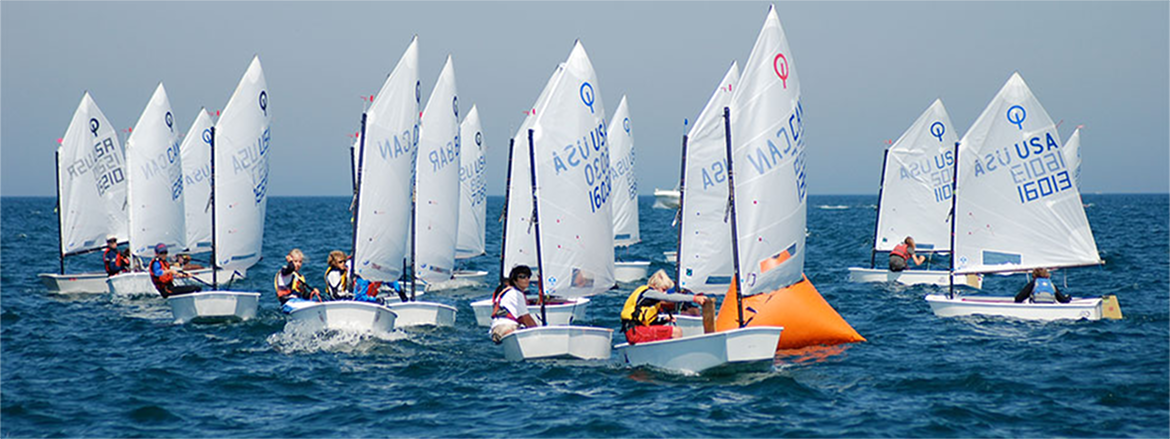
– Paul ElvstromSportsmanship in Sailing: Challenge and Opportunity
an opportunity. The challenge? Sportsmanship becomes essential. If the
competitors don’t follow the rules, the game becomes frustrating for
everyone. The opportunity? We get a unique chance to build a key life
skill.Growing Sportsmanship
1. Know the Rules
Rules of Sailing: The Best Learning Resources. Watch for more posts about rules on SailZing.2. Follow the Rules
Peter Barrett – 1964 Olympics
Sam Rogers – 2012 E Scow Blue Chip3. Enforce the Rules
4. Be Courteous
5. Be Fair
Smith Displays Sportsmanship and Killer Instinct – from the Royal Gazette6. Be Honest
7. Communicate
Sportsmanship and Communication are Key – Reaching Ahead Blog8. Move On
9. Help and Encourage Others
10. Be Prepared
Sportsmanship Articles

RRS – Part III; Post #5 – Rule 28
Rule 28 – Sailing the Race
28.1
“A boat shall start, sail the course, and then finish . While doing so, she may leave on either side a mark that does not begin, bound or end the leg she is sailing. After finishing she need not cross the finishing line completely.”
28.2
“A boat may correct any errors in sailing the course, provided she has not crossed the finishing line to finish.”
Let’s start with those definitions and then break this rule down too…
Start
If you need to review, CLICK HERE.Finish
Sail the Course
We’ll Start at the Beginning and Break Down Rule 28.1
“A boat shall start, sail the course, and then finish…”
(5) descriptions of marks, including starting and finishing marks, stating the order in which marks are to be passed and the side on which each is to be left and identifying all rounding marks (see rule 28.2);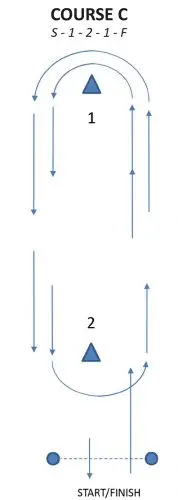
Click Here for the Course Descriptions for the 2022 SOS series.
“…While doing so, she may leave on either side a mark that does not begin, bound or end the leg she is sailing…”
“…After finishing she need not cross the finishing line completely.”
Sometimes, we make mistakes…. 28.2
“A boat may correct any errors in sailing the course, provided she has not crossed the finishing line to finish.”


Sail the Course


This is just but one example…
But… then there’s this somewhat confusing exception in the definition of Finish to consider too…
“… However, she has not finished if after crossing the finishing line she
takes a penalty under rule 44.2,
corrects an error in sailing the course made at the line, or;
continues to sail the course.”
Next Week – Rule 32; Shortening or Abandoning After the Start
RRS – Part III; Post #4 – Rules 30.3 & 30.4
Rule 30 – Starting Penalties
30.3 – U Flag Rule
“If flag U has been displayed, no part of a boat’s hull shall be in the triangle formed by the ends of the starting line and the first mark during the last minute before her starting signal. If a boat breaks this rule and is identified, she shall be disqualified without a hearing, but not if the race is restarted or resailed. “

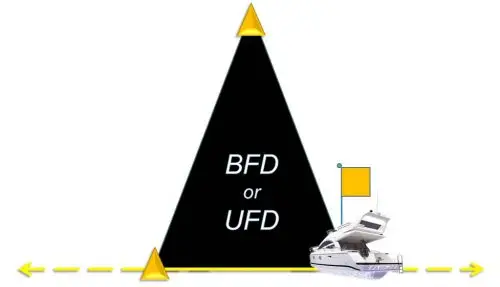
30.4 – Black Flag Rule
“If a black flag has been displayed, no part of a boat’s hull shall be in the triangle formed by the ends of the starting line and the first mark during the last minute before her starting signal. If a boat breaks this rule and is identified, she shall be disqualified without a hearing, even if the race is restarted or resailed, but not if it is postponed or abandoned before the starting signal. If a general recall is signaled or the race is abandoned after the starting signal, the race committee shall display her sail number before the next warning signal for that race, and if the race is restarted or resailed she shall not sail in it. If she does so, her disqualification shall not be excluded in calculating her series score. “

“… she shall be disqualified without a hearing, even if the race is restarted or resailed…”
“If a general recall is signaled or the race is abandoned after the starting signal, the race committee shall display her sail number before the next warning signal for that race…”
“… and if the race is restarted or resailed she shall not sail in it. If she does so, her disqualification shall not be excluded in calculating her series score. “
Why Such a Harsh Penalty?
Why Even Use the Black Flag?
A Final Note…
It included the following sentence at the end…If rule 29.2, 30.3 or 30.4 applies this rule does not.”
Next Week – Rule 28; Sailing the Race
RRS – Part III; Post #3 – Rule 30.2
Rule 30 – Starting Penalties
30.2 – Z Flag Rule
“If flag Z has been displayed, no part of a boat’s hull shall be in the triangle formed by the ends of the starting line and the first mark during the last minute before her starting signal. If a boat breaks this rule and is identified, she shall receive, without a hearing, a 20% Scoring Penalty calculated as stated in rule 44.3(c). She shall be penalized even if the race is restarted or re-sailed, but not if it is postponed or abandoned before the starting signal. If she is similarly identified during a subsequent attempt to start the same race, she shall receive an additional 20% Scoring Penalty. “

So… What’s Different?
Let’s Break it Down…
“…no part of a boat’s hull shall be in the triangle formed by the ends of the starting line and the first mark during the last minute before her starting signal…”

“…If a boat breaks this rule and is identified, she shall receive, without a hearing, a 20% Scoring Penalty calculated as stated in rule 44.3(c)… “
“… as stated in rule 44.3(c)… “
(C) “…the penalty shall be 20% of the score for Did Not Finish rounded to the nearest whole number (0.5 rounded upward)… However, the penalty shall not cause the boat’s score to be worse than the score for Did Not Finish.”“… She shall be penalized even if the race is restarted or re-sailed, but not if it is postponed or abandoned before the starting signal… “
“… If she is similarly identified during a subsequent attempt to start the same race, she shall receive an additional 20% Scoring Penalty. “
WOW! The rules are serious about this penalty!
And then things get strange…
Very often, race committees will use both 30.1 and 30.2 together!

What’s my responsibility as a competitor?
So, what about the Individual Recall?
Why is the rule so Harsh?